Tuesday, September 10, 2013

Heading into Fall.


It really feels like fall is on it's way when these guys bloom. 


So Sunny.


Our largest watermelon. I keep turning it on it's little bed of dry straw to try and keep it nice and uniform. 


We have a lot of butternut squash this year, which is fantastic. They store really well once cured, lasting into the winter months when you really enjoy a rich orangey-yellow bowl of soup. 


This pepper plant is loaded with red and green peppers at different stages of readiness. 


Dinner. Pole beans and corn on the cob. 


I made fish tacos and used this slaw to top them. Kohlrabi, carrot, cilantro, garlic, lime juice and sesame oil. 


Cucumbers for pickling. I'm making relish and other condiments these days. 


Harvesting lots of beauty toms these days. I took a picture of this end for a reason, that's what I want to see no blossom end rot, no blight.  Tomato success, so far! 

Friday, August 30, 2013

Dinner.


We had Halibut en papillotte with zucchini sticks and tiny red pepper slices.  This variety of pepper, which I cannot remember at this time, resulted in plants covered with peppers that are a bit smaller than peppers I've grown in the past, but bursting with flavor. I cut into this one pepper and the kitchen smelled as if I had chopped many more. I'm trying to use most of the zukes while they are still small. It can be hard work staying on top of them, we've had a few here and there the last couple weeks but now, there is about four or five on each plant that will all be ready at the same time. I can see some type of baked zucchini dish or baked good in our future.  


Two different varieties of corn. The two on the left are one variety and the one on the right is another, they all taste amazing! 


Thrashing through more seeds.

Wednesday, August 28, 2013

Seed Saving.


My seed saving, and crafting, station. AKA the kitchen table. 

I really, really got into seed saving this year. I've dabbled every other year, saving odd seeds from lettuces, greens, flowers, tomatoes, squashes and melons, all the easy things. I grew lots of lettuces, tomatoes, flowers and pumpkins from my saved seeds this year.  I'm not going to get into specific instructions for saving seeds from different crops here as there is a lot of info available online. The instructions vary and can be quite different from plant to plant. If you're saving seed from certain crops, you may only be able to grow one variety to avoid cross pollination. I had to locate the perfect spinach plant to allow to go to seed out of my bed of spinach. I had borrowed a book from the local library at the first of the summer to get all the details for my seed saving project. It was The Complete Guide to Saving Seeds .

  For the most part, seed saving is really straight forward and super simple! Most crops like; kale, lettuces, greens like arugula, radishes,  peas, bok choy and parsnips are simply left to flower and then to seed. The bees love them when they're in flower, more so than my actual flower beds. I had read before that it's best to let the seed completely dry out on the plant in the ground if possible, which seems to work extremely well. Then I harvest the whole plant, making the seed collecting easy-peasy. Most of these dried seed pods need only the slightest coaxing to come out of their papery shells.    


Sugar snap peas, Marigolds, Kale and Spinach seeds. 


More parsnip seed than I will use next year. Parsnip seed is typically only good for one year, so I will share these with other gardeners. 


Radish seed pods. 


Kitty cat amongst all my lettuces flowering and going to seed. 

I love allowing things to complete their life cycle in the garden. It makes me feel even more involved in my food production and saves us big bucks! Seeds are not exactly cheap to buy, although they really are when you look at how much food you can get from one packet, at about $4.00 for a packet of kale containing roughly 40 seeds, I know have about 400 kale seeds, if not more.  Most seeds keep well from year to year, except lettuce and parsnips, but instead of getting carried away and saving all of the seeds I want for 5 years, I'll let my crops next year go to seed too.  The buzzing of bees around these crops going to flower is more than enough reason to let them go. 

Tuesday, August 27, 2013


Our worst garlic harvest to date. The front box is for planting again. These were, sadly, our largest bulbs. I'll probably plant a couple more bulbs than these hoping for a good crop next year. Thankfully I planted a lot of shallots this year, and provided they do well, they will store well into March and help supplement our garlic harvest.  I am a little disappointed in this yield, but that's just the way it goes and there's always next year to try again! Soon enough it will be time to plant these again. There's not much that's easier to grow than garlic. 

Thursday, August 22, 2013

Some Close-Ups.


Butter nut squash blossom. 


Butternut squash blossom with foliage. 


Close-up! So pretty, I love squash blossoms. 


Cantaloupe melon. 


Watermelon. 


The squash on the blossom. That's a radish planted beside it, I had read in a companion planting book that letting radishes go to see in your cucumber and squash beds deters the striped cucumber beetle. Luckily, I have not see any this year. It could be due to the radishes and could be due to the fact that we rotate our crops every year. 


Kitty in the corn. She's not exactly allowed in the garden, we're ignoring her holes in the fence she gets in through since she just loves being in the garden and mostly sleeps under foliage. 


About two ears of corn on each stalk, we already ate a cob! 


Almost ready! Corn from the garden is worth every square foot used to grow it. 


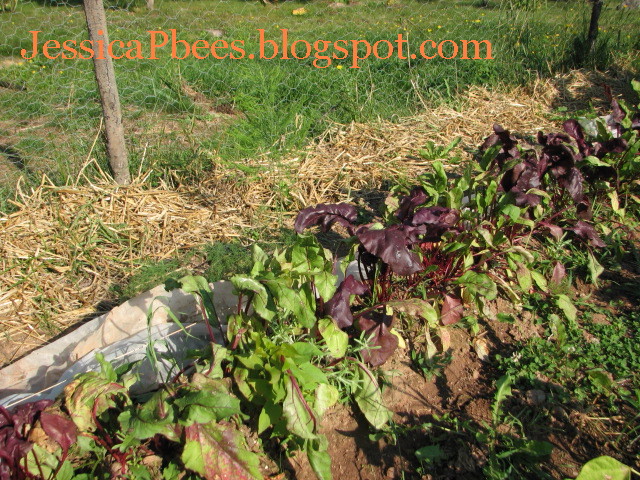
Just taking the row cover off our beets now and enjoying delicious, unharmed greens. Without a row cover, beets in my garden get eat to pieces by spring and summer bugs. 


Snoozing. 


The middle sunflower is really going for it, almost ready to bloom. 


White Russian kale from http://www.annapolisseeds.com/


Artichoke, I should have gotten a closer picture of the fruit starting to form on this guy. 


Peppers starting to turn red, almost time to make relish with my cukes and these guys. 


Tomatoes, no red ones yet! 


Romaine, I can never grow enough of this. 


Ground cherries on the plant, eating tons of these ripe little gems. They turn a bright orangey yellow and  fall to the ground when they're ready.  


Kohlrabi close up. 


Scallion patch. You can cut the greens off scallions and then they will re-grow. 


Basil, AFTER I made a huge batch of pesto. 


Squeezed in another row of beans several weeks ago. 


Storage onions and shallots. 


The big picture of the corn patch. 


Big picture of the squash bed with our dying potato plants. 


Pumpkin blossom. 


What an asparagus patch looks like at the end of summer. That's basil planted in the background, I read that asparagus and basil play nicely together when planted in the same bed. It's nice to grow something around the asparagus to help keep the weeds from invading the bed. 


We're eating so many strawberries these days. I have no pictures of the really nice ones cause they were quickly eaten. We eat them standing in the bed, mostly in the afternoon after the sun warms the berries. 


More strawberries and flowers. These guys usually produce flowers and berries until it's too cold and it kills the flowers. 


Petunias and pansies with lettuce in front, cilantro going to seed in the background. 


Red salad bowl lettuce all up in my flower bed. Really impressed with this lettuce, it's fairly unfazed by the heat, always a great trait for lettuce.  


Again, it's rich red color makes it an attractive salad or garnish. 


Morning glories making their way up the drain pipe.